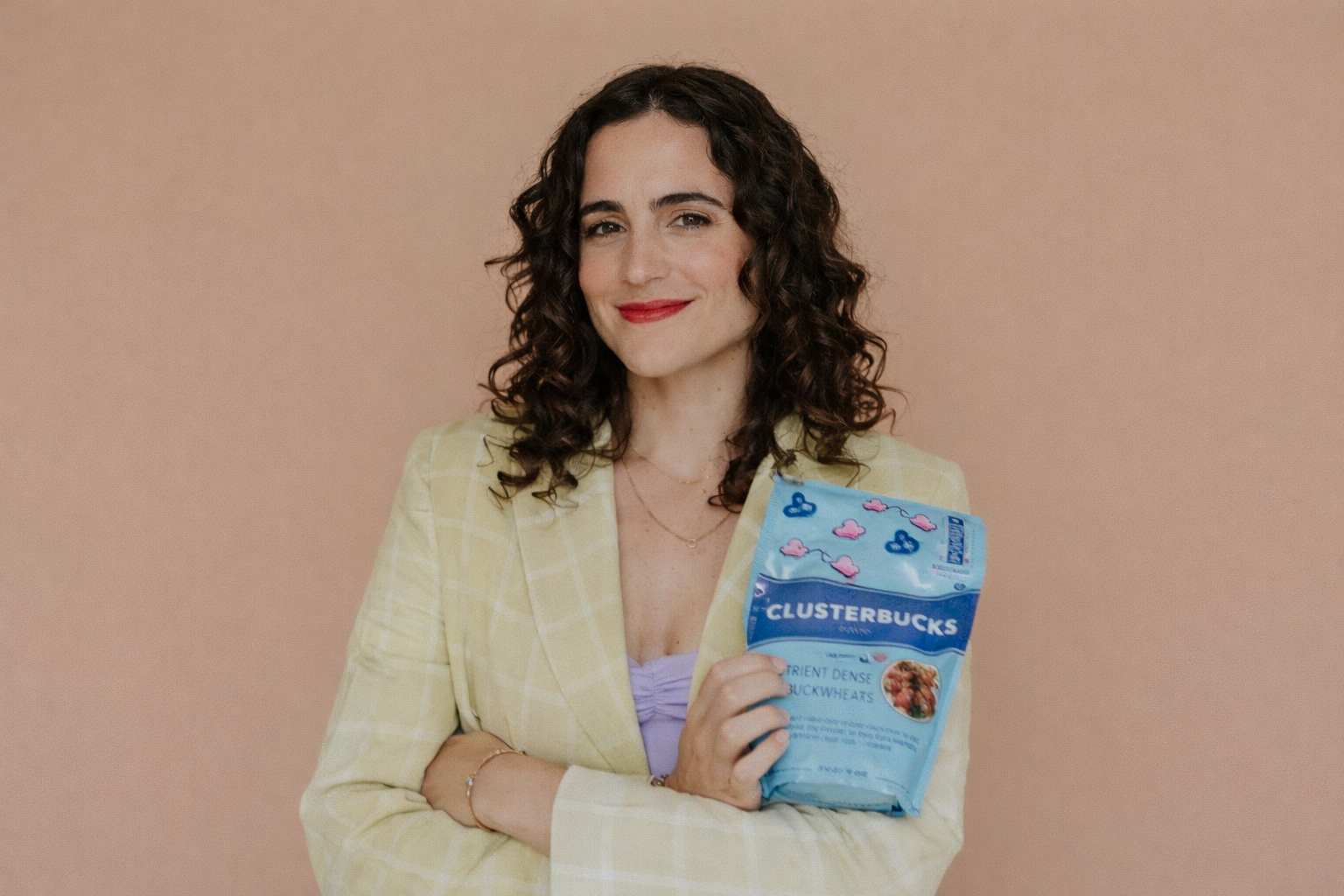
Emily Griffith did not build Lil Bucks by chasing the same playbook everyone else in food was following. She built it by betting on an ingredient most American shoppers barely thought about, then giving it a clear identity, a modern look, and a real reason to matter.
That ingredient was sprouted buckwheat.
What makes the story interesting is not just that Lil Bucks turned buckwheat into a snack and breakfast brand. It is that Emily Griffith took something unfamiliar, made it feel approachable, and connected it to bigger conversations around healthy snacking, soil health, regenerative agriculture, and what modern consumers want from a food brand.
In a market full of brands trying to look innovative, Lil Bucks found a smarter lane. It made buckwheat feel fun, craveable, and relevant. That is a big reason the company has stood out.
Who Is Emily Griffith
Emily Griffith is the founder and CEO of Lil Bucks, a food brand built around buckwheat-based snacks and toppings. Before launching the company, she spent time in Australia, where she was introduced to sprouted buckwheat in a way that completely changed how she saw the ingredient.
That experience gave her more than a product idea. It gave her a category opportunity.
She saw that in Australia, sprouted buckwheat already had a place in cafes and wellness-focused food culture. In the United States, though, it was still largely overlooked. Most shoppers were more familiar with granola, oats, cereal, and other breakfast staples. Buckwheat was not yet part of that everyday conversation.
That gap became the opening.
Instead of trying to build another me-too CPG brand, Emily Griffith saw a chance to introduce something different to the American market and shape the way consumers understood it from the ground up.
How the Idea for Lil Bucks Started
The origin story behind Lil Bucks is one of those founder stories that actually explains the business.
While living in Sydney, Emily Griffith had an açaí bowl topped with sprouted buckwheat. The crunch stood out right away, but so did the way it made her feel. It was not heavy like sugary granola, and it brought a texture and versatility that felt fresh.
That moment stayed with her.
As she kept seeing sprouted buckwheat used in restaurants, cafes, and healthy food spaces, she realized it was doing something that a lot of better-for-you products struggle to do. It felt nutritious, but it also tasted good and fit easily into real life.
When she looked back at the U.S. market, she did not see anyone building a recognizable consumer brand around it. That became the spark for Lil Bucks.
The company was not built around a made-up trend. It was built around a real product experience, a clear gap in the market, and a belief that consumers were ready for something beyond the usual breakfast aisle options.
Why Buckwheat Was a Smart Bet
At first glance, building a brand around buckwheat may have looked risky. It was not a mainstream hero ingredient in the U.S., and many shoppers did not know much about it.
That was also exactly why it had potential.
Buckwheat gave Lil Bucks a point of difference that was hard to copy. It was not just another oat-based granola or another snack built on a familiar wellness formula. It had its own story, texture, nutritional profile, and farming advantages.
From a consumer point of view, sprouted buckwheat offered a lot of modern appeal. It fit naturally into conversations around gluten-free snacks, grain-free products, plant-based foods, fiber-rich foods, and clean-label products. It also had a crunchy texture that made it easy to use across breakfast bowls, yogurt, smoothie bowls, snacks, and toppings.
From a brand point of view, it gave Lil Bucks something even more valuable. It gave the company a reason to exist.
That matters in a crowded food category. Brands that stand out usually do not just sell a product. They sell a better answer to a familiar need. Emily Griffith recognized that buckwheat could become that answer if it was packaged, explained, and positioned the right way.
Building Lil Bucks From a Niche Idea Into a Real Brand
A lot of food startups have an interesting concept. Far fewer know how to turn that concept into a brand people remember.
That is one area where Emily Griffith made smart decisions early.
She did not present Lil Bucks as a hard-to-understand health product. She made it feel bright, modern, and easy to try. The name was playful. The branding felt approachable. The product could slide into everyday routines without asking consumers to completely change how they ate.
That approach matters when you are introducing an unfamiliar ingredient.
When shoppers do not know what something is, the brand has to do extra work. It has to educate without sounding clinical. It has to explain benefits without becoming boring. It has to create curiosity without confusing people.
Lil Bucks handled that by making buckwheat feel less like a lecture and more like a discovery.
The company also grew through practical steps, including early market selling, direct consumer feedback, and the kind of repeated product education that newer food brands often need. That helped Emily Griffith refine not just the product, but the language around it.
How Lil Bucks Found Its Place in the Better For You Food Market
Timing helped, but timing alone does not build a lasting brand.
Lil Bucks entered the market at a time when consumers were paying more attention to functional foods, ingredient quality, and better snack options. Shoppers were already looking for alternatives to overly sugary cereals, heavy granolas, and processed snack foods. That created space for a brand like Lil Bucks to tell a new story.
What made the company more interesting than a typical wellness startup was that it did not rely only on vague health language. It had a real ingredient angle.
The products sat naturally inside multiple growing categories at once. They could appeal to people looking for healthy breakfast options, snack innovation, better-for-you foods, nutrient-dense ingredients, and allergen-friendly snacks. That gave the brand flexibility in how it could be merchandised, talked about, and adopted by consumers.
It also helped that Lil Bucks was not boxed into one narrow use case. Buckwheat could work as a topper, a crunchy addition to bowls, or as the base for a packaged snack. That versatility made the product story stronger.
Instead of asking consumers to learn an entirely new behavior, Emily Griffith plugged Lil Bucks into routines people already had.
Retail Growth and Brand Momentum
One of the clearest signs that Lil Bucks was moving beyond a niche idea was its growing retail presence.
The company earned visibility through programs like Target Takeoff, which gave the brand another layer of validation and exposure. It also gained traction with Whole Foods, a meaningful signal for a brand that sits at the intersection of wellness, innovation, and natural grocery.
Those milestones matter because retail growth is not just about shelf space. It is about trust.
When a younger food startup gets into respected retail environments, it tells consumers, buyers, and investors that the brand has moved past the idea stage. It suggests the product has enough pull, enough clarity, and enough staying power to compete in a real category.
For Emily Griffith, that momentum seems to have come from staying focused on what made the brand distinctive rather than watering it down. She did not build Lil Bucks to blend in with everything already on the shelf. She built it to make buckwheat impossible to ignore.
That choice gave the brand a sharper identity as it scaled.
The Role of Regenerative Agriculture in the Lil Bucks Story
This is where the story becomes bigger than snack food.
Emily Griffith did not just position Lil Bucks around taste and nutrition. She also tied the company to regenerative agriculture, which gave the brand a deeper purpose and a longer-term point of view.
For Lil Bucks, buckwheat is not only a compelling ingredient for consumers. It is also part of a broader conversation about how food is grown. The company has linked its products to farming practices focused on soil health, biodiversity, and more resilient agricultural systems.
That makes the brand feel more grounded than many companies that use sustainability language in a loose or generic way.
In the case of Lil Bucks, the ingredient itself helps support the message. Buckwheat has been talked about as a crop that can play a useful role in healthier farming systems, which makes the brand’s regenerative angle feel more connected to the product rather than tacked on for marketing.
That connection matters. Modern consumers are increasingly skeptical of surface-level claims. Brands that can tie their mission to their actual sourcing and product choices tend to feel more credible.
By making regenerative farming part of the company story, Emily Griffith gave Lil Bucks another layer of differentiation that goes beyond flavor or packaging.
Product Expansion and Innovation
A strong startup usually starts with one clear idea. A growing brand learns how to stretch that idea without losing itself.
That is something Lil Bucks has done well.
What began with sprouted buckwheat as a crunchy topper evolved into a wider product story. Over time, the brand expanded into more snack-friendly formats and flavors, showing that buckwheat could do more than live in one corner of the breakfast world.
That kind of expansion matters for two reasons.
First, it helps a company grow beyond its earliest fans. Some consumers may love a topper for smoothie bowls, while others may be more drawn to grab-and-go snacks. Offering multiple formats makes it easier to reach both.
Second, it proves the ingredient has range. That is important when a company is trying to build not just a product, but a category presence.
The smartest part is that Lil Bucks appears to have expanded without drifting too far from the original identity. The products still connect back to the same core themes: buckwheat, crunch, feel-good snacking, and a more modern pantry.
That kind of consistency is one reason the brand story holds together.
The Challenges Emily Griffith Had To Work Through
There is nothing easy about building a consumer brand around an ingredient most people do not fully understand.
That meant Emily Griffith had to solve more than one problem at once.
She had to create demand for the product itself. She had to educate consumers on what buckwheat is. She had to explain why sprouted buckwheat was worth trying. And she had to do it in a market where countless other brands were fighting for attention with simpler, more familiar language.
That is a hard balancing act.
Then there is the reality of scaling any food and beverage brand. Distribution, inventory, sourcing, pricing pressure, and retail expectations can strain even strong startups. For a company with a distinct supply chain and a mission-led sourcing story, those pressures can be even more complicated.
Still, these are the kinds of challenges that often shape the strongest brands. They force founders to get clearer, sharper, and more disciplined.
In the case of Lil Bucks, that pressure seems to have made the company more focused on messaging, product-market fit, and long-term brand value.
What Emily Griffith Did Right
A big part of this success story comes down to clarity.
Emily Griffith understood that an underused ingredient could become an advantage if the brand explained it well. She did not treat buckwheat’s lack of familiarity as a weakness. She treated it as an opening.
She also made a product with multiple strengths at once. Lil Bucks could speak to taste, texture, nutrition, convenience, and sustainability without feeling like it was trying too hard.
Just as importantly, she built a brand that felt current. The design, messaging, and product format made the company feel aligned with how modern consumers shop. That helped Lil Bucks avoid coming across as either too niche or too traditional.
Another smart move was connecting the business to a bigger mission without letting that mission overpower the product. Consumers may care about regenerative agriculture and sustainable sourcing, but they still need the food to taste good and fit into daily life. Lil Bucks appears to understand that balance.
That is a major reason the brand has had room to grow.
What Other Founders Can Learn From Lil Bucks
There is a lot that newer founders can take from the way Emily Griffith built Lil Bucks.
One lesson is that you do not always need to invent something totally new. Sometimes the better opportunity is to take an overlooked ingredient, product type, or behavior and reintroduce it in a way that feels timely.
Another lesson is that education can become part of the brand advantage. When consumers are unfamiliar with something, the company that explains it best often gets to define the category.
There is also a useful lesson in restraint. Lil Bucks did not need a messy brand story with too many claims. Its strongest points were already there: an interesting ingredient, a clear use case, a fresh identity, and a mission with substance behind it.
That kind of focus is rare, and it is often what helps a young company break through.
For founders watching the food space, Emily Griffith offers a good example of how to build around differentiation that actually means something. She found a gap, built a strong narrative around it, and turned Lil Bucks into a brand that feels larger than the niche where it started.